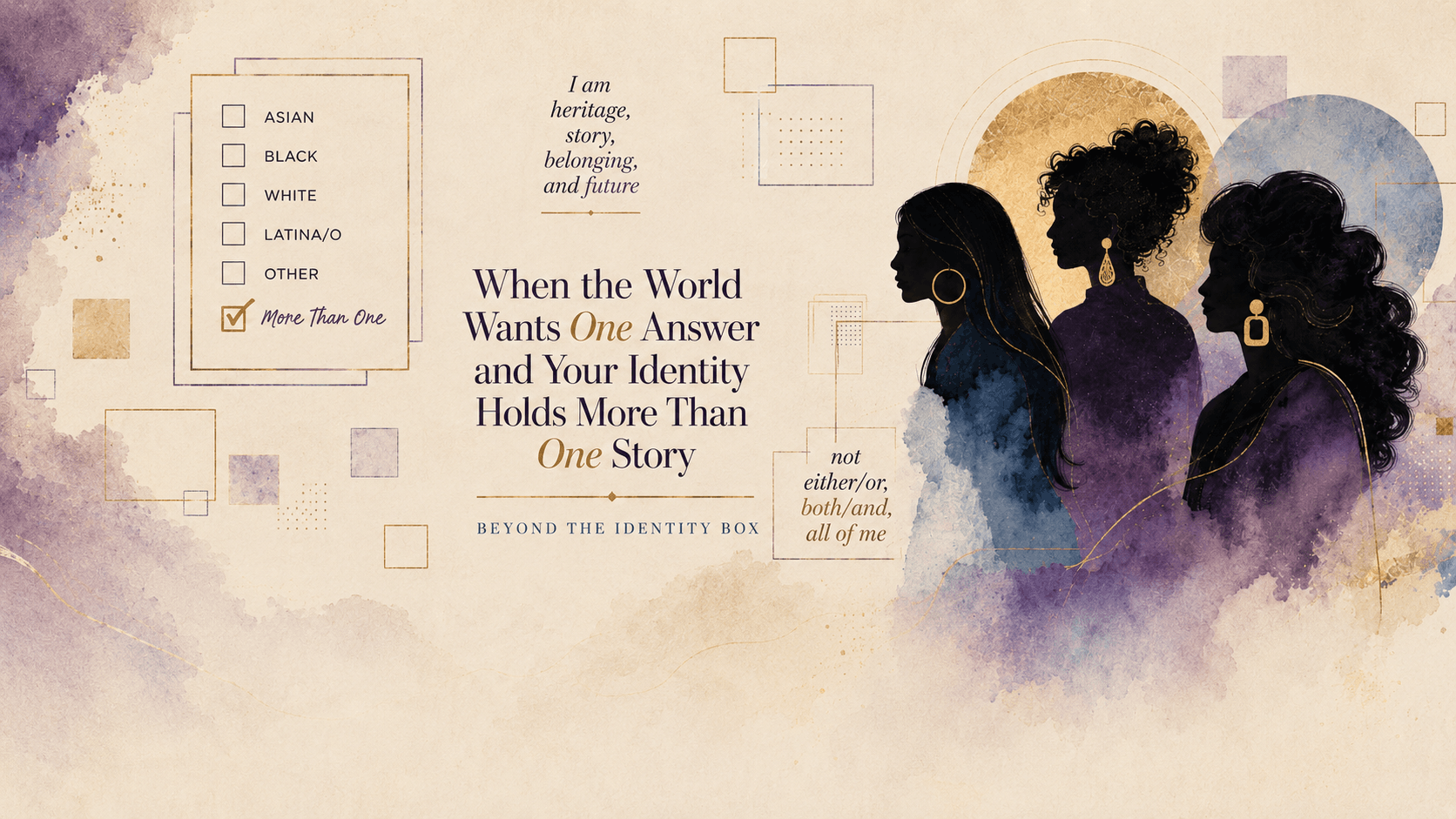
When the World Wants One Answer and Your Identity Holds More Than One Story
Beyond the Identity Box
Mixed girls often learn early that the world likes categories more than it understands complexity.
Before many mixed and biracial teenagers have the language to explain what feels uncomfortable, someone has already asked them to make identity simple. A classroom form may offer boxes that do not tell the whole truth. A stranger may study their features before asking a question. A family member may speak as if one side matters more than another. A peer may ask, “What are you?” with the expectation that one answer should be enough.
For the person asking, the question may feel casual. For the girl receiving it, the question can carry the weight of every moment when her identity has been examined instead of honored. One answer is being requested from someone whose story may hold more than one family line, more than one culture, more than one history, and more than one way of understanding herself. Even when a mixed girl knows the people who love her, the family stories that shaped her, and the parts of her background that matter deeply, the world around her may still expect a response small enough to fit inside someone else’s comfort.
The pressure to simplify mixed identity for someone else’s understanding can make belonging feel like something a girl has to earn instead of something she is allowed to experience.
Questions about mixed identity are not always asked with care. Comments about hair, skin tone, last names, features, language, or family structure can follow biracial girls into spaces where people want to decide where those girls belong before taking the time to know them. Repeated questions and assumptions can quietly teach a mixed teenager that her identity is open for public inspection, even while her heart is still learning how to make sense of the attention.
For girls living between categories, the emotional work can become exhausting. One side of the family may need explaining without making the other side feel less important. Cultural belonging may feel questioned in one space and assumed in another. A mixed-race girl whose identity does not fit into one familiar box may be expected to choose, defend, rank, or perform parts of herself so other people can feel more comfortable, even though real belonging should never require a young person to make her identity smaller, simpler, or easier for others to accept.
Real belonging gives mixed girls room to breathe. Teenagers living between cultures deserve to be known as whole people, not treated like puzzles other people are trying to solve. The stories carried by mixed girls are not confusing because those stories hold more than one culture, family line, or lived experience. Confusion often comes from environments that have not learned how to honor complexity without trying to simplify it.
Parents, educators, ministry leaders, family members, mentors, and children-centered leaders carry a meaningful responsibility in this work. Adults shape identity through words, silence, questions, correction, celebration, and the emotional tone created around a young person’s story. Identity development does not happen only during formal conversations. A biracial teenager is also listening when adults laugh at a comment that should have been corrected, avoid a topic that needed care, make one side of her family seem more important than another, or treat her background as interesting before treating her personhood as worthy of protection.
Supportive adults do not need perfect language to begin creating safer spaces. A willing parent, educator, ministry leader, family member, or mentor can slow down before making assumptions, listen when a mixed girl describes feeling misunderstood, and resist the urge to soften a painful moment for the comfort of everyone else in the room. When a biracial girl says a question, joke, label, or comment bothered her, the first response should not defend the person who caused the hurt; a caring adult should communicate that her experience matters, her voice is worth hearing, and her identity will not be treated as too complicated to protect.
Mixed girls should not have to become louder, older, or more wounded before adults take their identity seriously.
The practical truth is simple: mixed girls do not need help becoming easier to categorize; mixed girls need support becoming more confident in the fullness of who they already are. Adult guidance can give language to experiences a mixed teenager may not yet know how to name, especially when questions about race, culture, family, belonging, and difference come wrapped in discomfort. Open conversations within families can remove shame from identity development, school environments can make room for identity without turning a biracial girl into a lesson, and community spaces can choose care over curiosity when a mixed girl’s story enters the room.
Better support begins with better attention. Adults can move away from asking a mixed girl to explain what she is and make more room for who she is becoming. When a young woman’s story is layered, meaningful, and still unfolding, identity should not be treated as a single answer. Other people’s comfort should never become the measure of whether mixed girls are allowed to belong fully.
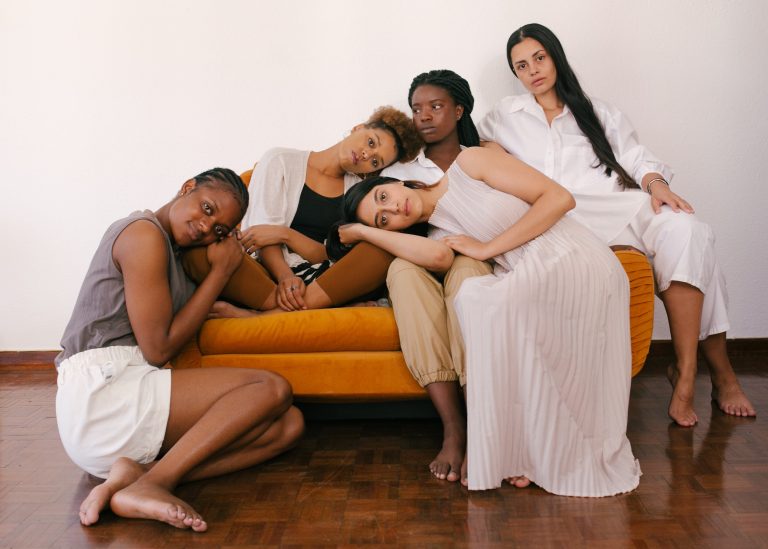
A mixed girl is not a checkbox, a question mark, or an incomplete combination of separate parts. Her story may carry more than one culture, more than one family line, more than one history, and more than one way of seeing the world, but complexity does not make her less whole. The fullness of mixed identity can hold beauty, wisdom, empathy, discernment, and possibility.
The world may continue asking for one answer, but girls living between categories deserve to know that identity is allowed to hold more than one story. Belonging does not require simplification, and confidence does not require choosing one part of herself over another. Wholeness does not need permission from people who only understand identity when it fits inside a box.
The work before families, schools, churches, and communities is not to make mixed girls easier to explain. The deeper responsibility is to notice them with greater care, listen to the questions mixed girls speak out loud, and pay attention to the questions mixed girls may still be carrying quietly. When adults offer language where confusion has been left alone, gentleness where pressure has been placed, and affirmation where silence has lingered, mixed girls are given more than encouragement; they are given room to stand in the fullness of who they are.
To read more Dear Mixed Girl® letters, articles, and support for mixed girls, families, and children-centered leaders, visit dearmixedgirl.com.
Be Blessed and Be At Peace.
Dear Mixed Girl® centers mixed identity, belonging, emotional intelligence, cultural proficiency, and the human experience of becoming with honesty, care, and depth.
Created by Dr. KayLa N. Allen-Young, this work continues to examine how mixed and biracial girls, families, educators, children-centered leaders, and communities understand identity, navigate relationships, build self-awareness, and create spaces where wholeness is honored instead of performance. Through articles, Dear Mixed Girl® letters, keynote speaking, workshops, coaching, and educational experiences, Dr. KayLa supports the people shaping how young women see themselves, carry their stories, and move through the world with confidence, dignity, and possibility.
Explore Dear Mixed Girl® Services