
Walk in Your Diversity: The Power of Being Intentional With Who You Are
You were fearfully and wonderfully made to reflect God’s creative power. Learn why walking in your diversity is leadership, legacy, and healing.
Most people are told to “be themselves” without ever being taught how.
Especially when that self is layered in cultures, languages, histories, and skin tones that the world doesn’t fully understand.
Let me be clear: diversity is not a buzzword. It’s a battle strategy.
And learning to walk in your diversity with intention is one of the most powerful things you will ever do — for yourself and for the generations watching you.
What It Means To Walk With Intention
To walk in your diversity intentionally means choosing not to be passive about who you are.
It’s not simply showing up — it’s showing up on purpose.
That looks like:
- Refusing to soften your edges to make others comfortable
- Naming your story — even the painful parts — and choosing to honor them
- Letting your child see you proud of your difference instead of ashamed of it
- Making space for God to guide your identity work, not just your quiet time
This isn’t just emotional work. It’s leadership development.
And in a world still steeped in assimilation and silence, your intentionality becomes a disruptive, healing force.

A Reminder Worth Sharing
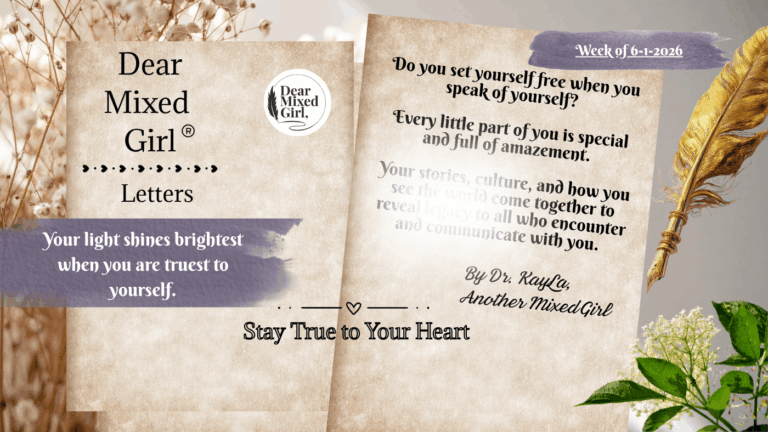
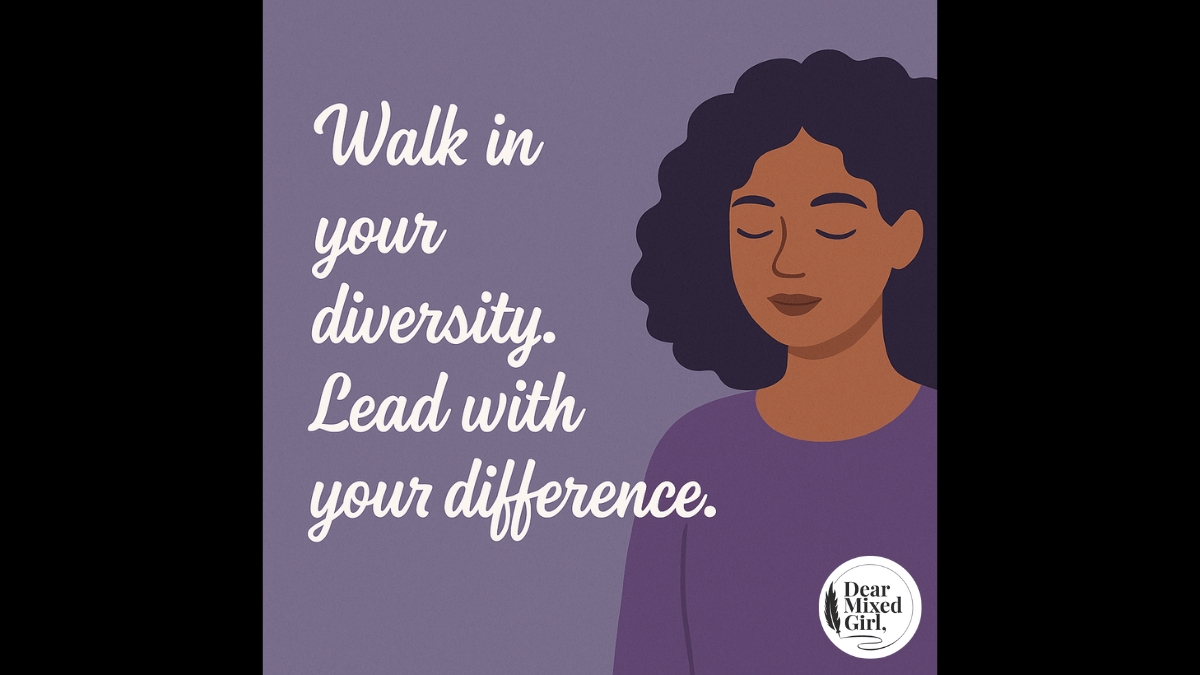
Let this quote be an anchor as you move through the world. Whether you're in a boardroom, a classroom, or your living room—it’s okay to show up as your full self. In fact, it’s sacred.
Five Ways to Walk in Your Diversity
1. Own Your Authority
Stop apologizing for being different. Your lived experience is not a liability — it’s your greatest asset. Whether you’re a parent raising a multicultural child, a young woman navigating your identity, or an educator building bridges in your classroom, the authority you carry comes from what you’ve lived through — not just what you’ve studied.
2. Narrow With Purpose
You don’t need to serve everyone. I’ve built Dear Mixed Girl® specifically for girls ages 12–18 and their parental figures — because that’s where the greatest identity shaping happens. Who is your work truly for? Speak directly to them. Let others listen in, but don’t water down your message.
3. Charge What Your Transformation Is Worth
Let me be frank: being approachable should never come at the cost of being profitable. If you’re helping families heal, thrive, or find their voice — that is worthy of financial exchange. Generosity and compensation can live in the same ecosystem.
4. Stop Over-Customizing Everything
When we constantly rewrite, redo, and reorganize for every event or request, we accidentally send the message that our foundational work isn’t enough. Standardize your excellence. Then let others rise to meet the value of what you offer.
5. Integrate Your Faith, Fully
God is not a footnote in my work — He is the reason for it. I used to hold back on speaking about spiritual insight, afraid of losing “professional” respect. But I’ve found that the parents and leaders who are called to walk this journey with me are also seeking divine alignment. Let your faith be visible. It doesn’t have to be loud — but it does have to be real.
A Final Word
Walking in your diversity isn’t about performance. It’s about power — spiritual, emotional, and ancestral.
It’s about choosing to love the story God wrote into your DNA, even if others never learn how to read it.
Be intentional. Be strategic. Be unapologetic.
There is a generation rising behind you that needs to know that identity is not something to run from — it’s something to lead from.
So walk, dear one.
And let every step affirm this truth: you are both the legacy and the leader.
Want support in helping your family, school, or organization walk in diversity with intention and grace? Visit: DearMixedGirl.com to learn about coaching, workshops, and upcoming events.
Further Reading & Trusted Resources
To explore research supporting identity development, cultural roots, and adolescent well-being:
The Development of Self and Identity in Adolescence – A foundational study on how identity development impacts psychosocial health.
NIH Article
Identity Matters for Well‑Being: Longitudinal Associations in Adolescents with Diverse Cultural Backgrounds – Springer via ResearchGate
↑ Insightful research linking identity commitment and developmental outcomes, especially for youth from migrant or mixed-race backgrounds.
Be blessed and be at peace.
—Dr. KayLa N. Allen-Young
Founder, Dear Mixed Girl®
About the Author
Dr. KayLa N. Allen-Young is a Certified Health and Well-Being Coach, global speaker, and founder of Dear Mixed Girl®, where she supports girls ages 12–18 and their parental figures in navigating identity, cultural complexity, and leadership. She holds a Doctorate in Health Administration, a Master of Public Health, and post-master’s training in epidemiology. Dr. KayLa speaks on topics including diversity, parenting, biracial identity, cultural proficiency, and identity development. Her work weaves storytelling, science, and Spirit. Learn more or work with her at DearMixedGirl.com.